Lyons understood something many automobile manufacturers never quite figured out: people bought with their eyes first. Mechanical specifications mattered, but beauty could pull a customer across a showroom before the salesman had time to clear his throat.
The sidecar business developed into coachbuilding. Lyons purchased chassis from manufacturers including Standard, Swift, and Fiat, then covered them with bodies of his own design. His cars looked lower, longer, and considerably more expensive than the machinery beneath them.
In 1931, the SS 1 arrived. Its sweeping fenders, low roofline, and absurdly long bonnet offered an early indication of what Lyons was planning. He was learning how to make an affordable automobile carry itself like something parked outside a European casino.
Then came September 1935.
At the London Motor Show, SS Cars introduced the SS Jaguar 2½ Litre sports saloon, the first automobile to carry the Jaguar name. It had a 2½-liter inline-six producing approximately 105 horsepower, flowing fenders, a sharply raked grille, and the proportions of a car built for someone with considerably more money.
During the unveiling, Lyons asked the assembled audience to estimate its price.
Looking at the long bonnet, carefully shaped bodywork, leather interior, and polished wood trim, guesses climbed toward £1,000. That was understandable. The Jaguar looked every inch like an expensive, hand-built European motorcar.
The actual price was £395.
Lyons had pulled off the trick that would define Jaguar for decades. He delivered the appearance, speed, and presence of an expensive automobile at a price that made competitors wonder which accountant had been locked in the basement.
The SS Jaguar could reach roughly 85 miles per hour, serious speed for a British saloon in 1935. It gave buyers genuine performance without demanding the financial commitment normally associated with cars of similar stature.
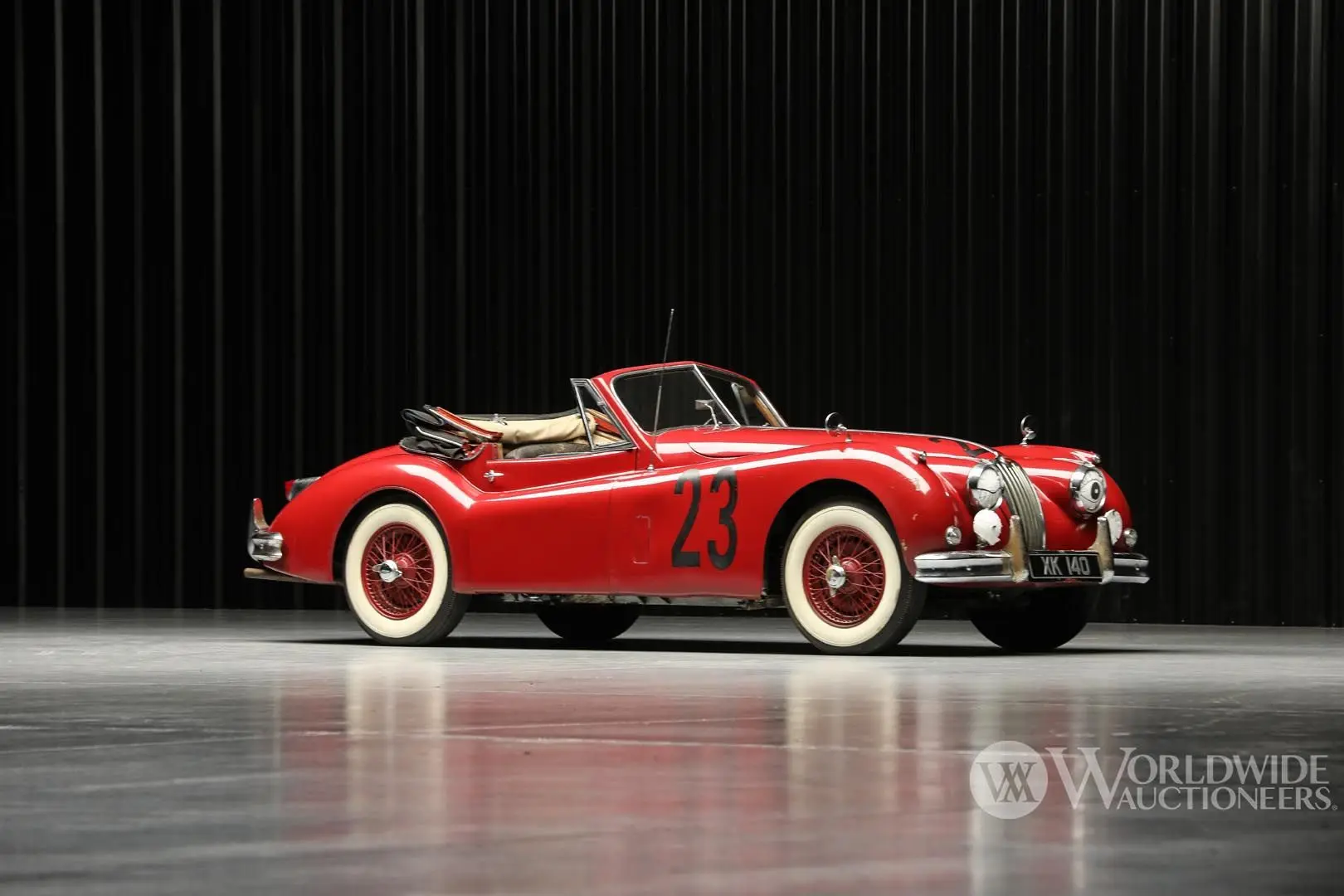
Its influence is easy to recognize. The XK120 followed the same thinking. So did the E-Type and XJ6. Each offered dramatic styling and substantial performance for far less than comparable machinery from Europe’s established luxury manufacturers.
There was, however, one piece of unfinished business.
After World War II, the initials “SS” carried associations no British company wanted anywhere near its showroom. In 1945, SS Cars Limited officially became Jaguar Cars Limited. The model name introduced ten years earlier had become the company’s identity.
The 1935 SS Jaguar 2½ Litre established the formula on the first attempt: make it beautiful, make it fast, and price it low enough to make the competition look greedy.
William Lyons began with motorcycle sidecars. By 1935, he had created Jaguar.