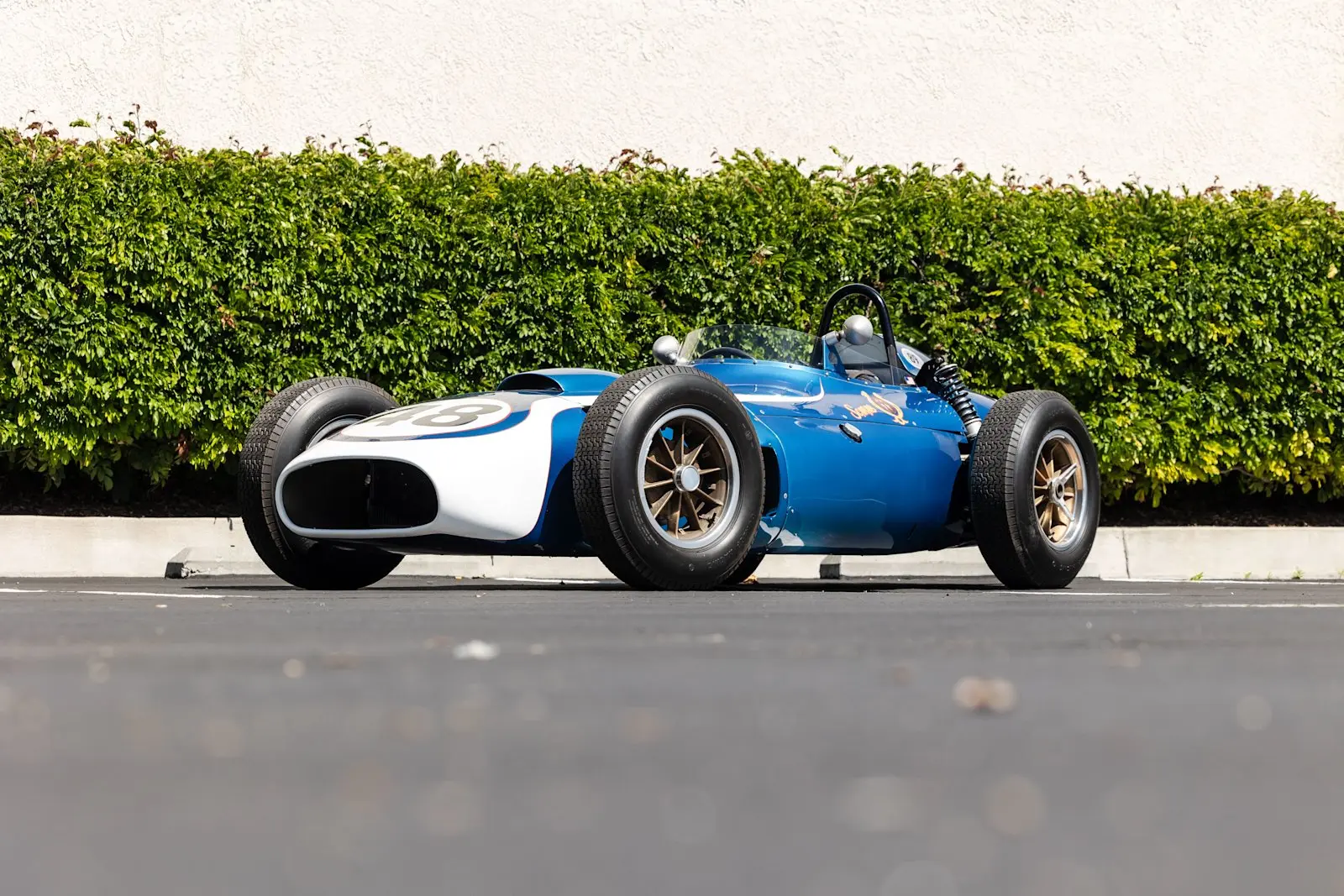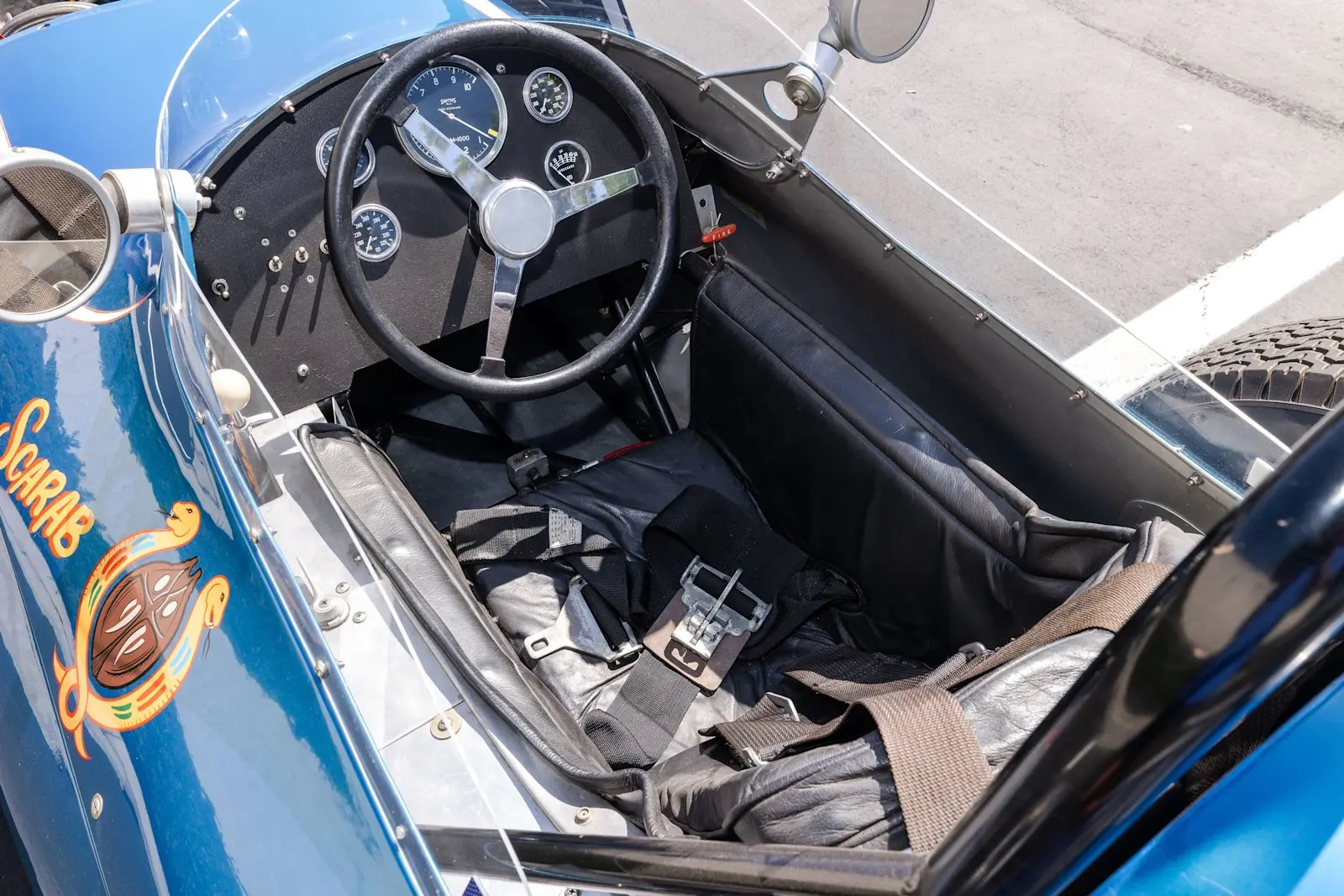

In Formula One, the crucial time is the one frozen on the face of a stopwatch. A machine and its driver are judged by seconds, tenths and hundredths. The passage of time offers a different measure. Cars that were unfulfilled dreams in their day can be understood for their engineering, their beauty and the human effort behind them.
Young Lance Reventlow’s Scarab team ended the 1958 season on top of the American sports-car world. Backed by his inheritance and drawing from Southern California’s deep pool of hot-rodders, oval-track builders and sports-car mechanics, the 22-year-old assembled an extraordinary group. Their Chevrolet-powered Scarab sports racer was designed and built in five months. Once its early problems were sorted, it beat the leading Lister-Jaguars and Ferraris in the country.
The original plan was Europe, including Le Mans. Then the FIA imposed a three-liter limit for sports cars following the disasters at Le Mans in 1955 and the Mille Miglia in 1957. The Scarab’s European campaign ended before it began.
Reventlow chose a larger target: Formula One. The idea of an American constructor challenging Europe with a homegrown Grand Prix car was irresistible. After a final sports-car victory at Nassau in December 1958, he offered the Scarabs for sale and turned Reventlow Automobiles Inc. toward F1.
The project was caught in a technical shift. The familiar front-engine cars from Ferrari, Maserati, Vanwall and BRM were being outmaneuvered by smaller, lighter, rear-engine Coopers. Reventlow also insisted on an all-American machine, even though nearly every established Grand Prix component supplier was in Europe.
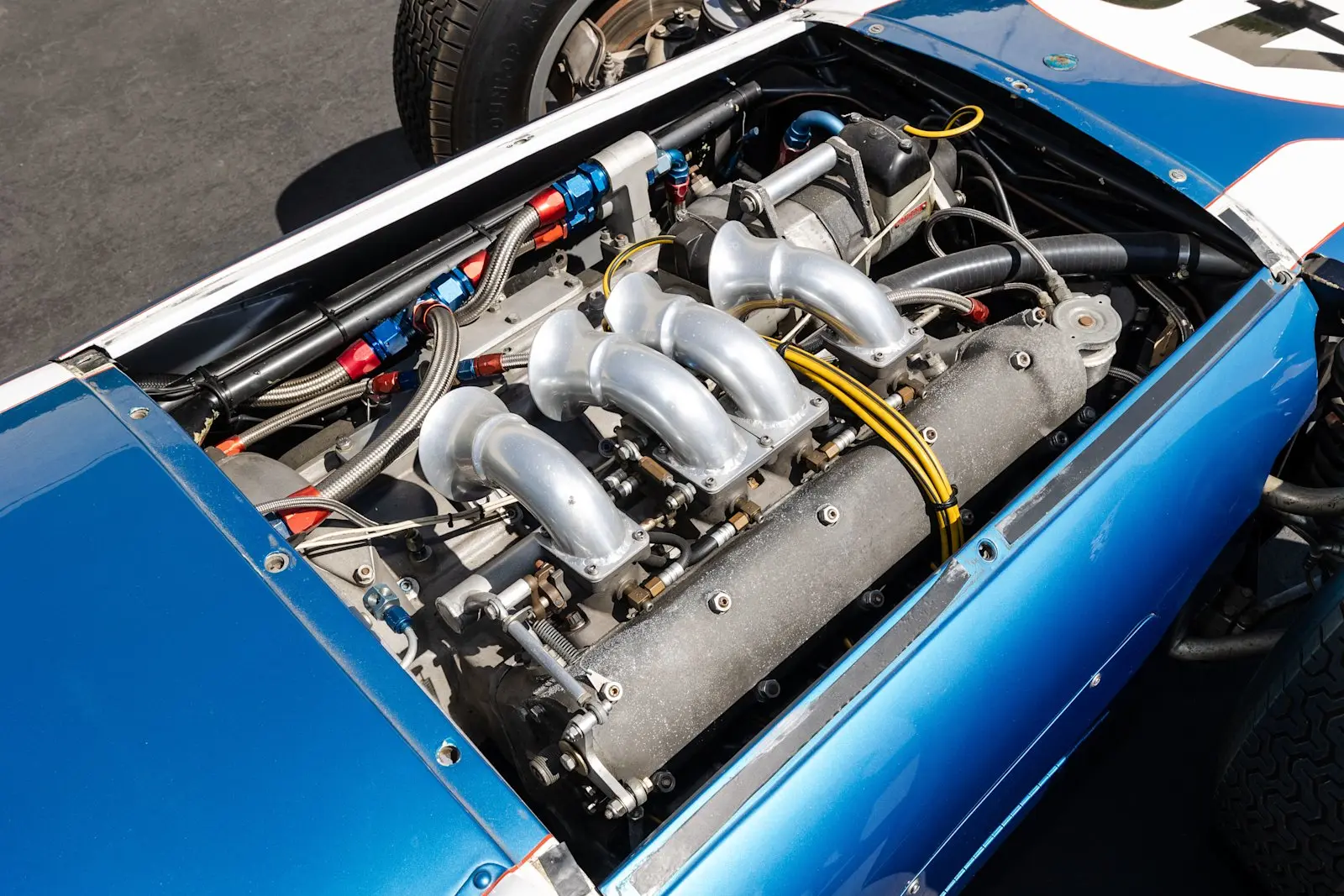
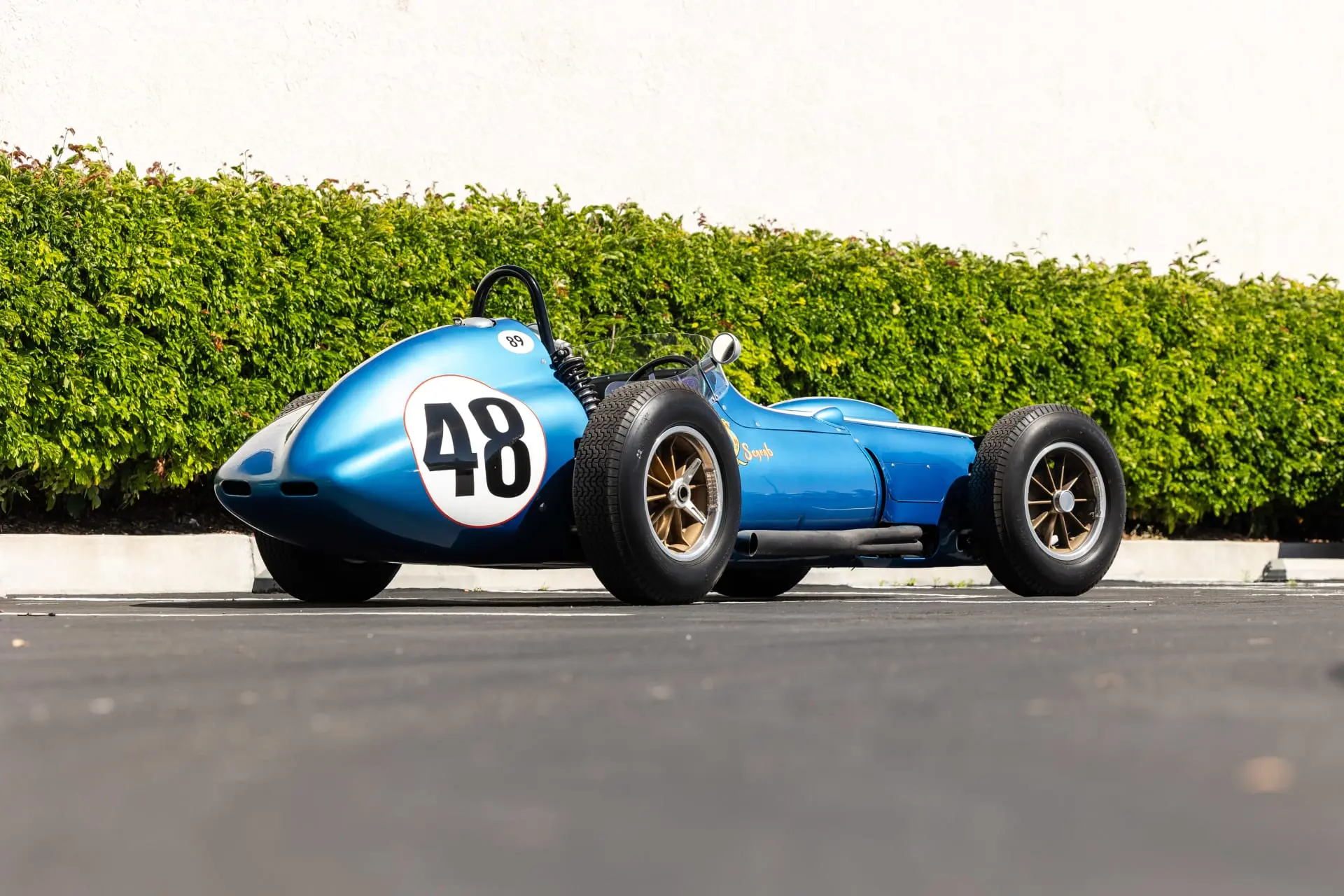
Leo Goossen, renowned for his work with Miller, Drake and Offenhauser engines, designed the 2.5-liter four-cylinder. The engine was laid on its side to lower the center of gravity and frontal area, following Indianapolis practice. Its double-overhead-camshaft head used desmodromic valve operation, mechanically opening and closing the valves rather than relying on conventional springs. Hilborn fuel injection completed a specification expected to produce roughly 260 horsepower.
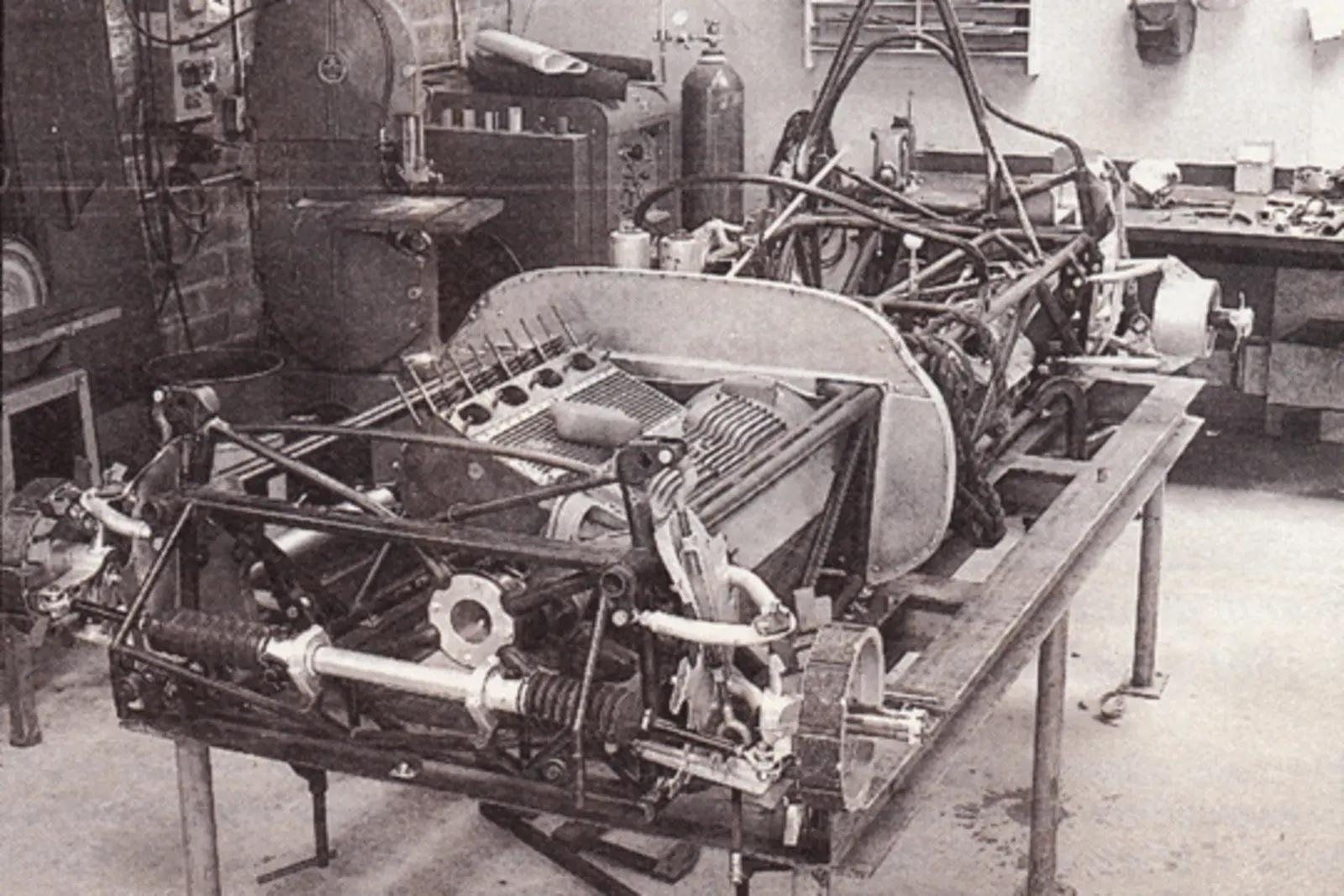
RAI general manager Warren Olsen hired 23-year-old aircraft designer Marshall Whitfield to lay out the chassis. It was Whitfield’s first racing car. He drew a tidy front-engine structure filled with unconventional details—some from his aircraft background, others forced by the requirement to avoid overseas suppliers.
Development consumed the 1959 season. A planned debut at the United States Grand Prix at Sebring never happened. Bruce McLaren and Maurice Trintignant finished first and second there in rear-engine Coopers, and Jack Brabham pushed another Cooper across the line to secure the championship. The American car had not yet raced, but its architecture was already behind.
The Scarab finally tested at Riverside with a three-liter Offenhauser engine while the desmodromic unit was still being finished. The car was quick there. With the 1960 season underway, the team packed for Europe.
MONACO, ZANDVOORT AND SPA
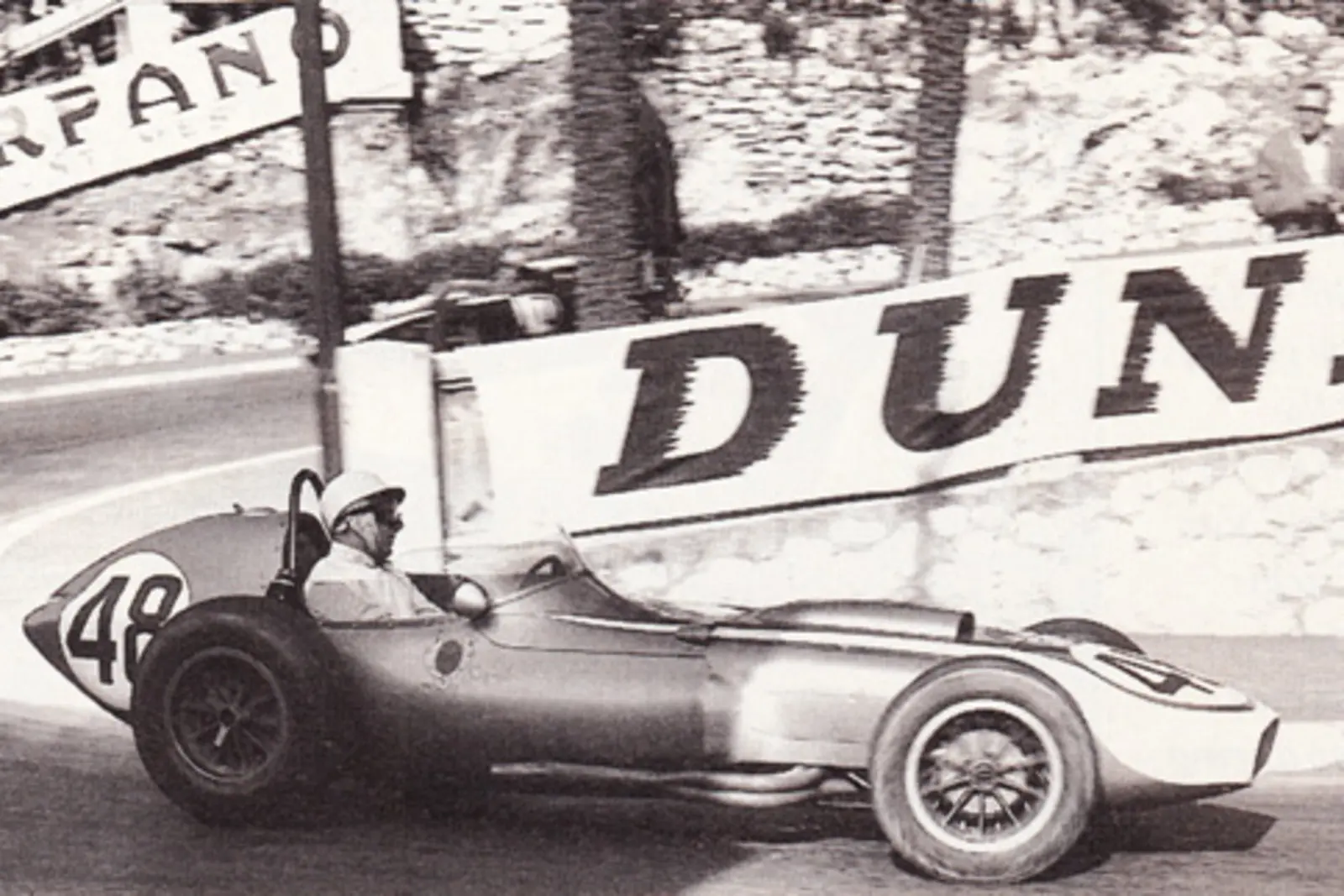
Monaco was the worst possible opening exam for a large front-engine car. Reventlow and Chuck Daigh had to learn the circuit while dealing with a brake pedal that could suddenly fall to the floor. The engines sounded magnificent but were far below their expected power. Daigh later estimated they were making closer to 218 or 220 horsepower.
Reventlow invited Stirling Moss to try the car. Moss, then the acknowledged master of Monaco, immediately cut several seconds from Daigh’s time. Daigh found more speed, but neither Scarab qualified.
At Zandvoort, Daigh set a time good enough for the back of the grid. Reventlow did not, but the organizers attempted to place him in the race anyway, displacing private entrants who depended on starting money. Reventlow sided with the privateers and withdrew the team. “Lance wanted to be a good sport,” Daigh later said. “He did not realize it was business.”
The Scarabs made their first Grand Prix start at Spa. The weekend became one of Formula One’s darkest. Stirling Moss and Mike Taylor were seriously injured in practice; Chris Bristow and Alan Stacey were killed during the race. Reventlow retired with engine trouble. Daigh continued until an oil leak stopped his car, having driven the uncompetitive Scarab with enough commitment to earn the European press’s respect.
Reims brought more engine failures. The final race of the 2.5-liter formula was the 1960 United States Grand Prix at Riverside. On home ground, Daigh qualified 18th, fought fuel-starvation trouble and finished tenth after a race-long contest with Wolfgang von Trips’s Cooper-Maserati. It was Scarab’s only World Championship finish.
THE INTERCONTINENTAL SEASON
RAI had begun a rear-engine Scarab, but the FIA held to its new 1.5-liter Formula One rules for 1961. Reventlow joined other owners of obsolete 2.5-liter cars in supporting the new Intercontinental Formula.
Chassis GP-2 returned to Britain with an improved desmodromic engine. In heavy rain at Goodwood, Daigh ran third before finishing sixth. He placed seventh at Silverstone, then crashed heavily at a later Silverstone meeting. GP-2’s rear structure was destroyed and Daigh was hospitalized.
The remains returned to Southern California. Usable components were saved. Decades later, a group of restoration partners began locating the pieces, most of them still within 75 miles of the former RAI shop.
They recovered the front suspension, uprights, control arms, springs, dampers, steering rack and anti-roll bars. Rear suspension pieces, fuel tanks, radiator, engine components and nearly all the original aluminum body panels survived. The nose, cowl, side panels and hood still wore blue paint and hand-lettering associated with Von Dutch. The original 1960 desmodromic engine was obtained from California collector Ron Kellogg along with drawings and documents.
RESTORING GP-2
The professional restoration began in 1988 and occupied much of the following decade. Original fabricator Dick Troutman used surviving drawings and the original Reventlow chassis table to reconstruct the frame. Chuck Daigh guided work on the suspension and drivetrain, then rebuilt and tuned the engine.
That engine provided a late answer to one of the project’s largest questions. The original valve clearances had been set to prevent breakage as the engine warmed, relying partly on cylinder pressure to hold the valves shut. The compromise hurt breathing and power. Properly adjusted during the rebuild, the engine produced a reported 265 horsepower on the dynamometer.
“It wasn’t enough to make us World Champions,” Daigh said, “but we sure would’ve looked a hell of a lot better than we did.”
Brian Redman tested the restored GP-2 in 1997 with a Formula Libre Chevrolet engine installed. The car later appeared at Lime Rock, Amelia Island, Greenwich, Bagatelle and the Goodwood Festival of Speed. With the original desmodromic engine returned, it was driven in historic events by Redman, Damon Hill and Daigh.
The Scarab Formula One project failed by the clock. It was late, underdeveloped and built around a layout Formula One had already abandoned. Yet its construction belonged to a remarkable American workshop culture. The names connected to it include Reventlow, Olsen, Phil Remington, Ken Miles, Jim Travers, Frank Coon, Leo Goossen, Chuck Pelly, Emil Deidt, Chuck Daigh and Von Dutch.
GP-2 also carried an exceptional roster of drivers: Reventlow, Daigh, Richie Ginther and Stirling Moss. Its results were modest. The machinery, the people and the size of the attempt were anything but.