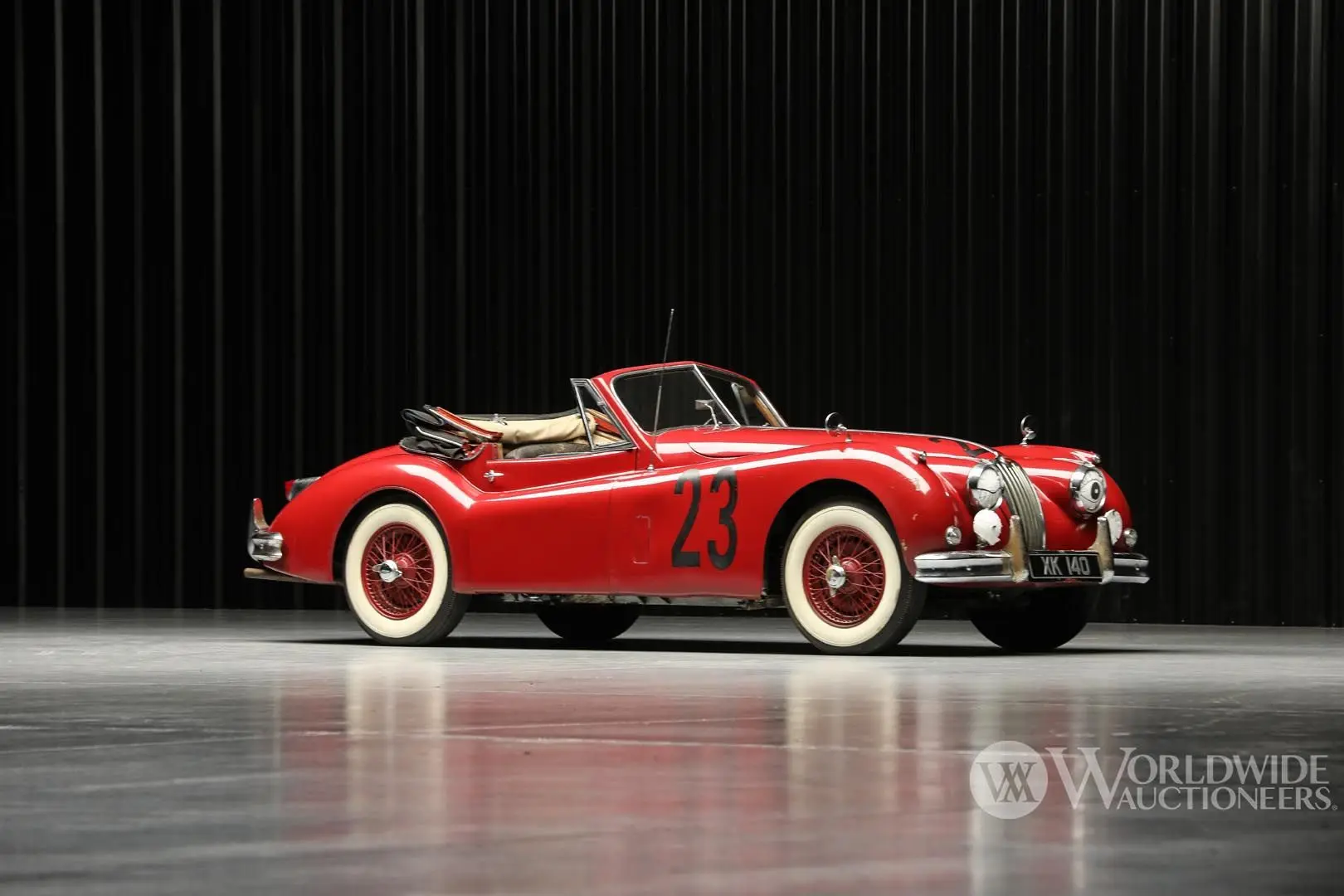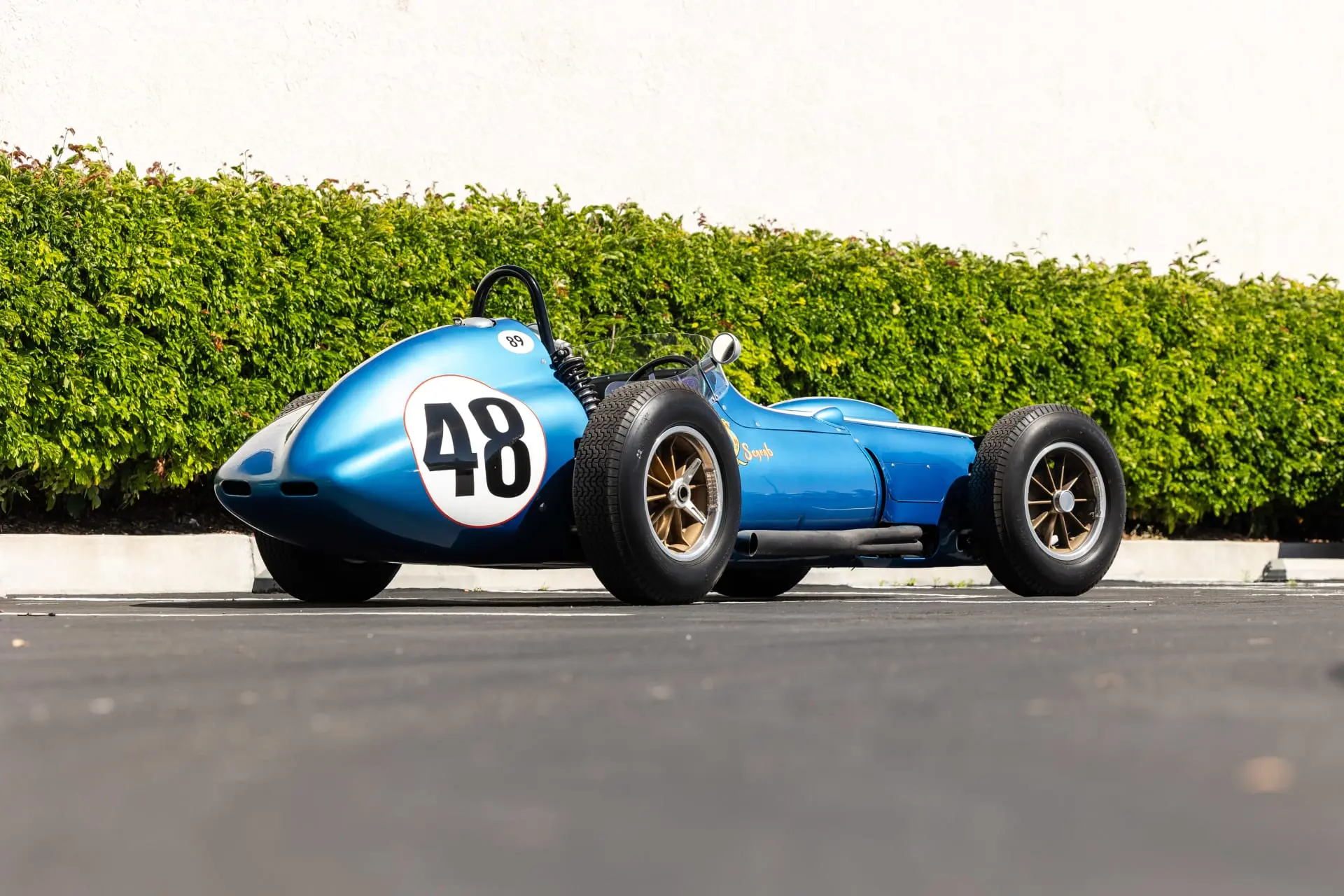
At the top end, it is absolutely alive. Monterey moved roughly three-quarters of a billion dollars’ worth of cars this year, with about 850 vehicles sold across the major auctions. That is not a market in distress. That is a market with very specific taste, very deep pockets, and a growing allergy to cars that are merely expensive.
Ferrari remains the main event.
Through the first half of 2026, Ferraris made up 43 percent of all seven-figure collector-car sales. Nine of the ten biggest auction results were Ferraris. That is a staggering concentration of money around one little dancing horse from Maranello.
The big old cars still command the room because they have the things money cannot manufacture: limited production, real racing history, known ownership, original components, proper documentation, and a shape that makes you stop talking mid-sentence. A white 1962 Ferrari 250 GTO brought $38.5 million at Mecum Kissimmee. At Amelia Island, a 1960 Ferrari 250 GT SWB California Spider sold for more than $16.5 million.
That is not random auction madness. Those are cars with a paper trail, competition history, and enough cultural weight to make a hedge-fund guy suddenly become interested in brake cooling ducts.
The market for the right classics is strong because buyers are still hunting for certainty. They want the real car, not the clever car. A restoration is fine if it is documented. A replacement engine can be discussed. But if the provenance gets fuzzy, the bidders get quiet faster than a guy at dinner when the check arrives.
Modern collectible Ferraris are also having a very good year—especially the cars already accepted into the club. Enzo, F50, LaFerrari, 288 GTO, F40: the established halo cars are moving upward because the market has decided they are no longer used exotics. They are now artifacts of a period when Ferrari built cars that looked like somebody had designed them with a ruler, a cigarette, and no concern whatsoever for cup holders.
The F50 has been particularly hot, as have the Enzo and LaFerrari. Buyers who once chased limited-edition watches and beachfront property are now chasing low-mileage, correct-color, Ferrari Classiche-certified cars with books, tools, factory luggage, and no stories that begin with, “Well, the title situation is a little complicated.”
But the new-car side is a different animal.
The 296 is a superb machine. The SF90 is a land missile with headlights. The Purosangue is a Ferrari for the man who wants to arrive at the country club with four adults and a V12. Yet late-model Ferraris are behaving like modern luxury goods: impressive, fast, beautifully made—and subject to the cruel mathematics of supply, financing, and the next model announcement.
Current asking-price data shows real separation between the halo cars and the production cars. Pre-owned 296s have shown a wide range, with examples down into the high-$200,000s. SF90 values have softened from their early hype. Purosangue premiums are no longer treated like a law of physics. Ferrari will always build less volume than the Germans, but it still builds enough cars that buyers can wait.
And waiting has become the new flex.
Here is the rant: for twenty years, too many people bought cars because some broker in loafers told them a red one was “an asset class.” Then they parked them under fitted covers, watched online price guides, and acted shocked when a $600,000 hybrid supercar behaved like a $600,000 hybrid supercar instead of a 1962 GTO.
A collector car is not a cryptocurrency with leather seats. Buy the best example you can afford. Buy history. Buy condition. Buy the car that makes you turn around in the garage after you shut the door.
And if you buy a new Ferrari strictly because you believe it will pay for your retirement, I have a waterfront estate in Fresno with excellent dock access.
The market is healthy. It is just done rewarding lazy money.