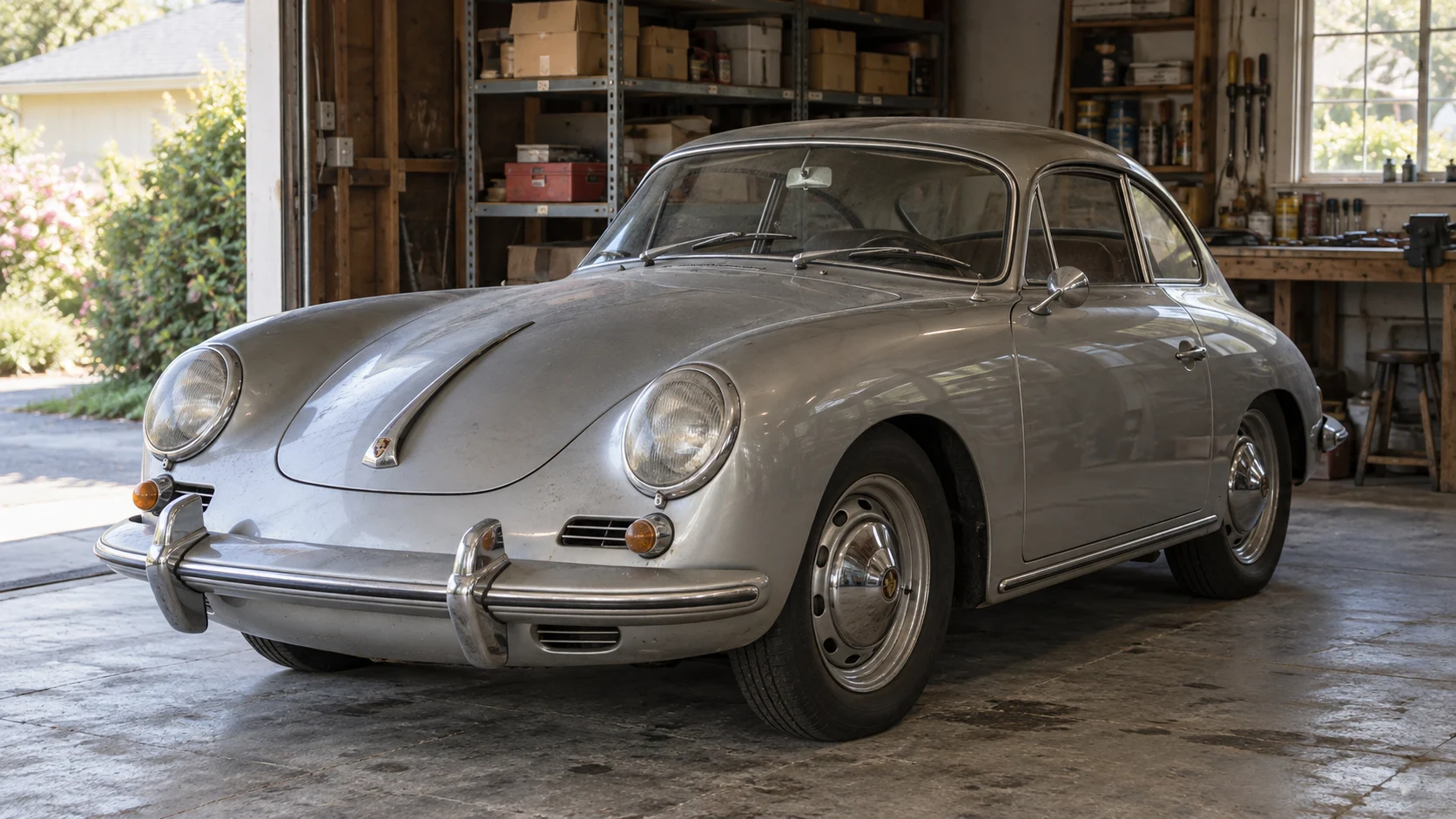

The garage door goes up. There is a familiar roofline under the dust, a pair of round headlights, and just enough chrome to make everybody forget what they were doing five minutes earlier. Picture a Porsche 356 that has been sitting for years. The immediate temptation is to find a battery and see whether it will run. That temptation deserves a chair and a cup of coffee while the sensible people have a look.
A car that has waited this long can wait another day. Before the cleaning supplies arrive, photograph it where it sits. Record the cabin, engine compartment, luggage area, loose parts, and whatever paperwork has survived. Keep the ordinary details in the frame. An old workshop label or a box of removed pieces might help explain something that would otherwise become an expensive guessing game.
There is also a conversation to have with whoever knows the car. Why was it parked? Who worked on it? Was the engine changed? Where did the original seats go? Write down the answers, including the uncertainty. A family recollection is a lead to investigate. It becomes much more useful when you can connect it to a dated photograph, invoice, or earlier owner.
Dust is excellent theater. It tells you very little about the metal underneath. The romantic description of a car can grow several paragraphs before anyone has looked below the carpet. Have a specialist familiar with the model assess the structure and mechanical condition, then plan the work. Leave the first start until the fuel, lubrication, electrical, and other relevant systems have been evaluated. The video can wait too.
The next decision is what sort of car you want at the end. A carefully preserved driver and a comprehensively restored show car are different projects. Both require judgment. Replacing everything that looks old can erase useful evidence; keeping everything merely because it looks old can leave serious problems unresolved. Photograph parts before removal and keep a record of what changes.
A 356 suits this discussion because so much of its appeal is visible before it moves. The compact body, the simple dashboard, the way the roof falls toward the rear: there is plenty to appreciate while you work out what you actually have. There is no need to decorate the discovery with an imaginary racing career or a celebrity owner who supposedly borrowed it one summer.
Be equally clear about the spending. An inspection should lead to a written scope and estimates, with room for discoveries during the work. Decide whether the result you want is worth the commitment to you. A handsome car in an atmospheric garage can make the arithmetic surprisingly hard to read.
Then keep the record going. Photograph the repairs. File the receipts. Label the parts that stay with the car. The next owner should be able to understand what happened during your care without assembling a detective squad. The best thing to come out of that garage may be a Porsche that can be enjoyed again, accompanied by a history someone can actually follow.